

A journey into who we are, what we have learned, and what kind of country we choose to become
By Duncan Fraser for Winding-Roads
October 19, 2026
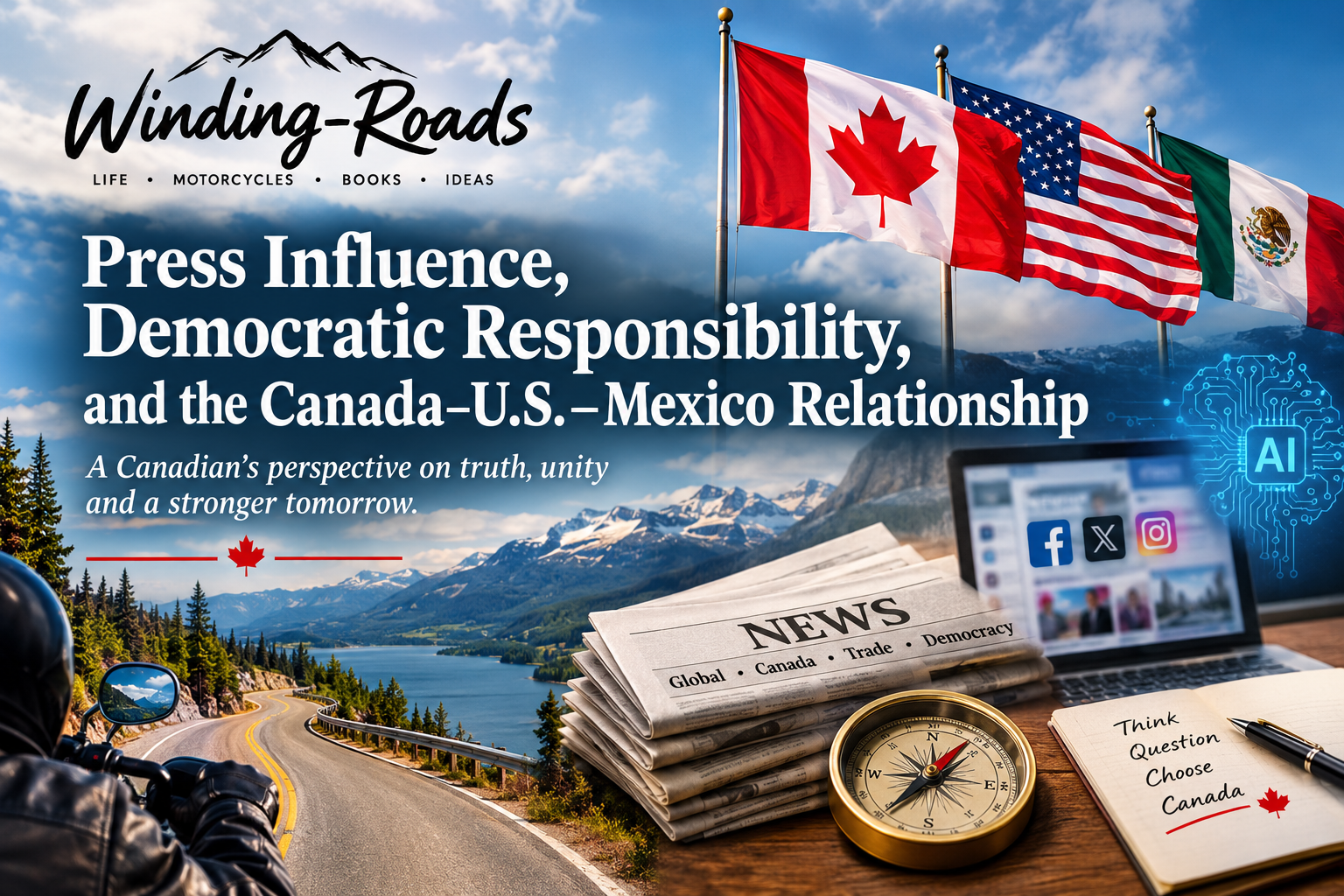
There are moments in the life of a country when events happening today force us to look backwards and ask ourselves a much bigger question:
Who are we?
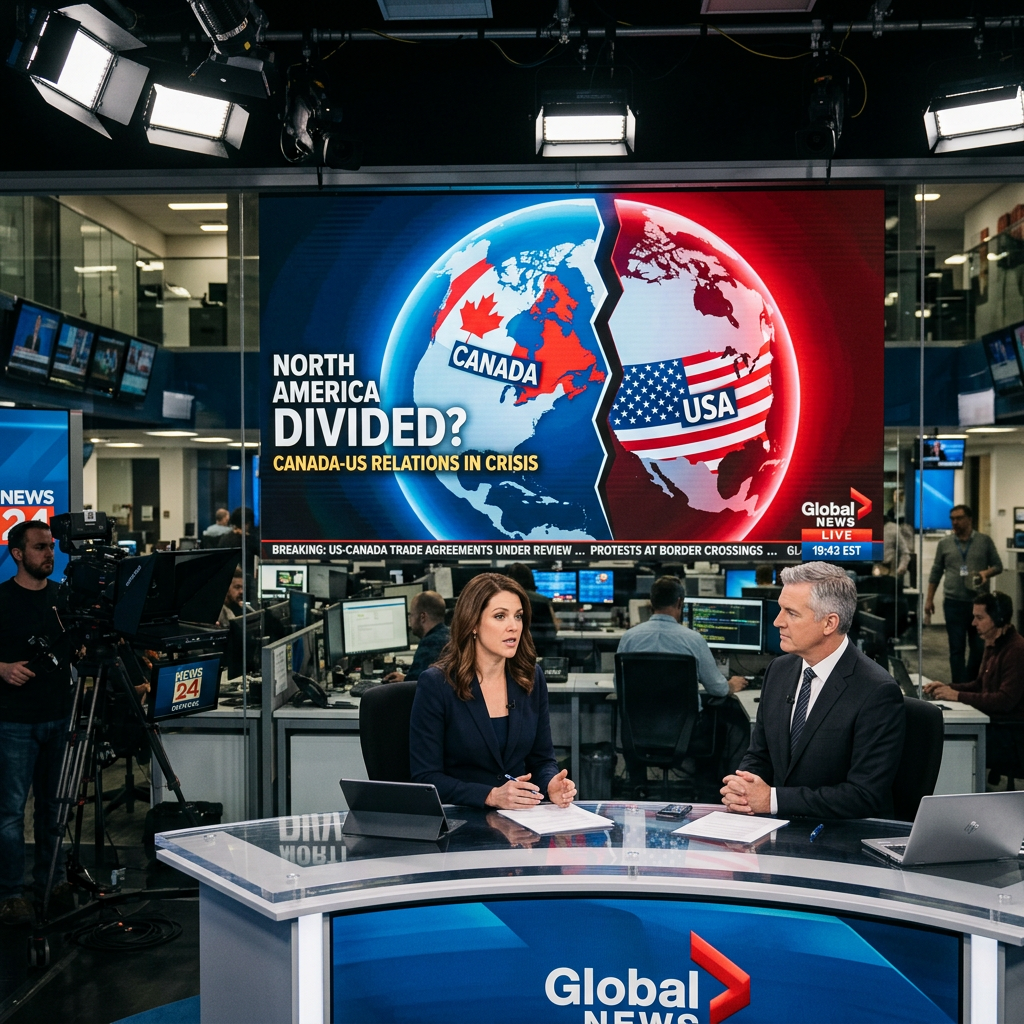
The collapse of the latest Canada–United States trade negotiations has brought that question sharply into focus for me.

I am an 81-year-old Scots Canadian. I have spent much of my life working, travelling, raising a family, building a business and simply getting on with being Canadian. I have travelled extensively through the United States and have great affection for the American people and for much of what America represents.
So this is not an anti-American article.
It is about Canada.
And perhaps, after all these years, I am finally beginning to understand what Canada means to me.
This is about more than trade
The current dispute with the United States is obviously about tariffs, markets, jobs and economics. Those things matter enormously.
But something else has emerged from the negotiations that troubles me.
Canadian language, culture and the right of Canada to make its own choices have become part of the discussion.
Prime Minister Mark Carney has said that French-language protections and Canadian culture are not simply trade irritants but fundamental Canadian interests. The negotiations collapsed on August 21 after the two sides failed to reach an agreement, and the United States subsequently imposed new tariffs on Canadian goods.
I find myself asking:
How did I come to care so deeply about this?
The answer takes me back several years.
My journey into becoming a better Canadian
I have written before about my attempts to understand Canada and our relationship with the peoples who were here long before the country called Canada existed.
One of those pieces was What is Truth? Where I exlore Pierre Elliott Trudeau’s belief in the rights of our native peoples and his ensuring that they are protected in the Canadian Constitution along with Frank Scotts poem on the residential schools.
Another was Choosing a poem I wrote while contemplating the huge problems in Canada having to come to grips with our nations failing our original peoples and a world wide pandemic that is devastating millions.
At the time I didn’t fully understand where these pieces were taking me.
I do now.
They were the beginning of a personal journey into the question of who and what we are as Canadians.
A reading I recorded from the life of Pierre Elliott Trudeau, together with the writing of Francis Bacon, John Milton and the Canadian poet Frank Scott, led me to think more deeply about truth, justice and our treatment of Canada’s Indigenous peoples.
The residential-school system forced me to confront a part of Canadian history that I had not understood deeply enough.
The Truth and Reconciliation Commission documented the experiences of Survivors and produced 94 Calls to Action. Approximately 150,000 First Nations, Inuit and Métis children were separated from their families and communities and forced to attend residential schools.
The numbers are enormous.
But behind every number was a child.
A First Nations Knowledge Keeper changed how I looked at responsibility and guilt.
During a conversation with a Knowledge Keeper from a local Nation, I spoke about my own feelings of responsibility and guilt for what had happened.
He looked at me and said:
“Duncan, you are not responsible for things done before your time. It is what you do now that you are more informed that matters.”
I have never forgotten those words.
They changed something in me.
I had been thinking about guilt and He was talking about responsibility.
There is an enormous difference.
I cannot change what happened before I was born but I can decide what I do after learning about it that is what reconciliation means to me now.
It is not inherited guilt, it is inherited responsibility.
My Scottish history gives me another window
I am Scottish by birth.
I have thought a great deal about the destruction of the traditional Highland clan structure and the suppression of Gaelic culture and Clan stucture . The first phase of the Clearances occurred mostly over the period 1760 to 1815. The Highland Clearances and the transformation of Highland society left wounds that remain part of Scottish historical memory.

I would never claim that the Scottish experience and the experience of Canada’s First Nations are the same. They are not.
But my own history has given me a small window through which I can understand something about what happens when a powerful political system disrupts an older society’s land, institutions and culture.
Perhaps that is one of the reasons the Knowledge Keeper’s words affected me so deeply.
History doesn’t have to divide us, sometimes history can teach us empathy.
Canada was never been one people
The more I have learned about Canada, the more I have come to understand that the country I grew up in was never simply one culture.
The First Nations, Inuit peoples were here long before European settlement. The Metis People grew from a union with the first French settlers and from Champlain’s overtures of alliance from 1608 onwards offering to make “one people” through the merger of the French with the Algonquin, Mi’kmaq and Iroquoian speaking nations, the formal sanction for the emergence of the Metis was set.
After the the French, the British the Scots and the Irish and generation after generation of peoples from around the world.
Ukrainians came in great numbers to settle the Prairies. Italians, Germans, Poles, Scandinavians and many others helped build our cities, farms, mines and industries.
Then came enormous waves of immigration from Asia, the Caribbean, Africa, the Middle East and Latin America.
The 2021 Census recorded more than 450 different ethnic or cultural origins among Canadians. More than 1.8 million people identified as Indigenous, while more than one in five Canadians were immigrants or permanent residents.
This is not an accident, it is Canada.
We didn’t become the same.
That may be one of the things I misunderstood when I was younger.
I used to think of multiculturalism as many cultures living alongside one another but now think it is something more profound.
The cultures that came here did not simply remain separate, they changed Canada and Canada changed them.
French Canada became part of the national story and the Métis Nation grew and became an integral part of the Canadian story.
Chinese Canadians helped build British Columbia and the railway and Ukrainians helped settle the Prairies.
South Asians, Italians, Filipinos, Caribbean Canadians, Africans and people from virtually every corner of the world have added their own histories to ours.
Statistics Canada now records hundreds of cultural origins and hundreds of languages spoken regularly in Canadian homes.
We are not one people, ee are a people who chose to build a country together.
That is why reconciliation matters
If I have learned anything from my journey, it is that acknowledging Canada’s failures does not make me less Canadian.
It makes me more determined to understand Canada.
I don’t want to erase our history, I want us to face it.
I don’t want Canadians to live forever in guilt, I want us to accept responsibility for what we know now.
There is a difference.
We cannot undo residential schools and we cannot return every acre of land to the condition it was in before European settlement.
We cannot bring back the children who died but we can listen to Survivors and help preserve Indigenous languages and cultures.
We can honour treaties and work with First Nations, Inuit and Métis peoplesto continue the difficult work of truth and reconciliation.
That is not weakness. It is maturity.
And then came Dondald Trump and his illegal trade war with Canada
Perhaps this is why the current dispute with the United States has affected me differently than it might have years ago.
I understand the economic argument, Canada needs the American market but American companies need Canada as well
Our economies are deeply intertwined and I don’t want that relationship completly destroyed.
But friendship and dependence are not the same thing.
Canada must be able to make its own choices.
We need to develop new markets, we need to strengthen our relationships with Europe and the Indo-Pacific.
We need to develop our energy and critical-mineral resources and build a sustainable infrastructure.
We need manufacturing and stronger defence capabilities.
We need Indigenous partnerships and investment that engages all Canadians..
And we need immigration that helps build the Canada of tomorrow.
All of these things require time.
A restrictive trade arrangement that limits Canada’s ability to make those choices will do something more damaging than simply cost us money.
It could delay the Canada we are trying to build.
The current trade confrontation is already forcing Canadian businesses and governments to rethink assumptions about our traditional economic relationship with the United States.
That may ultimately prove to be painful—but it may also be an opportunity.
We can love America without becoming America
I want to say this clearly. I have travelled across America.
I have met and done business with Americans.
I care about America and do not want to see our two countries become enemies.
But being America’s neighbour, friend and trading partner does not mean becoming America. Trump has severly damaged our relationship and it will never be the same again. Canada is moving on by becoming more united at home and more engaged overseas.
Canada has its own history. Its own institutions. Its own languages.
Its own cultures and its own Indigenous peoples.
Its own responsibilities. And its own future and we should be able to say that without anger.
A country confident enough to admit its mistakes
Perhaps this is what my journey has really been about.
I started by trying to understand the truth about our treatment of Indigenous peoples and began asking questions about residential schools.
I read, listened and wrote.
I looked at my own Scottish history and thought about immigration and the extraordinary collection of peoples who have become Canadian and gradually I came to understand something.
Canada is not perfect. It never has been.
But perhaps Canada’s strength lies partly in the fact that we can acknowledge that.
We can look at the residential-school system and say we were wrong.
We can look at discrimination against Chinese Canadians and say:
We were wrong.
We can look at the treatment of Indigenous peoples and say:
We were wrong.
And then we can ask: What do we do now that we know?
That is the question the Elder gave me.
What do we choose?
I am 81 years old and I don’t know how much of the Canada that is emerging today I will live to see.
But I know that I want to see us begin and I want Canada to become more economically independent without becoming isolated.
I want us to remain a good neighbour to the United States without becoming dependent upon it while strengthening our relationships with Europe and the rest of the world.
I want us to welcome people from other countries while remembering the peoples who were here first and I want reconciliation to continue and not be derailed by extemist fearmongering.
I want French and English Canada to remain integral parts of our national identity and for us embrace our native heritage and for all Canadians to be proud of the our collective peoples.
And I want every Canadian, whatever their ancestry, to be able to say: This is my country too.
That, to me, is multicultural Canada not a country where everybody becomes the same. A country where our differences are allowed to become part of something larger.
We inherit history. We don’t inherit guilt.
I keep returning to what that Elder who was a Knowledge keeper said to me:
“Duncan, you are not responsible for things done before your time. It is what you do now that you are more informed that matters.”
Perhaps that is the most important lesson I have learned.
We inherit history. We inherit its achievements. We inherit its failures. We inherit its mistakes. But we don’t have to repeat them.
We can learn. We can change. We can choose.
And perhaps that is what being Canadian means to me now. Not believing that Canada was always right, not believing that Canada is perfect, but believing that Canada is capable of becoming better.
I Choose Canada
As I enter my eighth decade I have spent a lifetime being Canadian.
Only recently have I begun to understand what that means to me.
I am a Scots Canadian and part of the history of immigrants who came here.
I live on lands whose history goes back thousands of years before Canada existed and have benefited from a country that has made terrible mistakes.
And I now believe that acknowledging those mistakes is not an act of betrayal, It is an act of faith. Faith that we can do better and faith that reconciliation is possible.
I have Faith that different peoples can live together without one having to erase the other and faith that Canada can become more independent without becoming less compassionate.
I have a faith that the Canada we leave to our children and grandchildren can be better than the Canada we inherited.
So when I look at the uncertainty we face today, I don’t want to retreat into anger. I want to choose.
I choose Canada.
Not the Canada that was perfect—because it never was and not the Canada that someone else wants us to become but the Canada we can still choose to build together.
That is the Canada I want to leave behind.
Earlier Winding-Roads readings that helped shape this journey
What is Truth? — Francis Bacon, Milton and my search for Truth and Reconciliation
Choosing — A poem contemplating Canada’s failing of its First Peoples
Duncan Fraser Reads — Citizen of the World: The Life of Pierre Elliott Trudeau
This article is a personal reflection. The views expressed are my own and are intended to contribute to the continuing Canadian conversation about reconciliation, culture, sovereignty and the future of our country.


Leave a Reply