
Press Influence, Democratic Responsibility, and the Canada–U.S., Mexico Relationship

As a Canadian entering my eighty-first year, I have lived through periods of economic uncertainty, geopolitical tension, and political upheaval before. What distinguishes the present moment is not simply the number of global crises unfolding simultaneously — war in Ukraine, a war in Iran, devastation in Gaza, a largely ignored catastrophe in Sudan,a Trade War with the USA and the way political narratives now move at scale, often untethered from human authorship or accountability.
In such an environment, rhetoric matters. Language hardens positions, narrows options, and can inflame situations already under strain. To examine Canada’s relationship with the United States today without acknowledging this broader global context would be shortsighted. Yet to become consumed by it would be equally unwise. The task is balance — and clarity.
Canada does not approach this moment unprepared. The Public Inquiry into Foreign Interference in Federal Electoral Processes and Democratic Institutions, chaired by the Honourable Marie-Josée Hogue, confirmed what many suspected: foreign states do attempt to interfere in democratic systems. What is new is not the intent, but the means, scale, and velocity of that interference. Equally important, the inquiry concluded that Canada’s democratic institutions have thus far remained robust.
That finding should reassure us — but not relax us.
Leadership and Credibility in a Volatile Era
It is within this context that Prime Minister Mark Carney’s leadership must be understood. Carney brings to office a depth of global economic experience that is rare in modern politics: former Governor of the Bank of Canada, Governor of the Bank of England, chair of Bloomberg L.P., and a central figure in international financial and development institutions.
That background matters. It shapes a governing approach focused on internal resilience, diversification of trade relationships, and a clear-eyed acceptance of the interwoven economic reality of Canada, the United States, and Mexico.
From Editorial Direction to Algorithmic Pressure
My concern about narrative influence did not begin with artificial intelligence. When Trump started this trade dispute with Canada, I spent a great deal of time examining how press coverage and framing shaped public understanding of events with real economic consequences.
Canada has already seen how concentrated media ownership can influence tone and emphasis. When Postmedia reportedly instructed its newspapers that their coverage was “not conservative enough,” it demonstrated how editorial direction — without altering facts — can shift perception across an entire media ecosystem.
If that level of influence is possible through traditional editorial structures, it is not difficult to understand what can be achieved through automated systems operating at scale without an editorial board to report to.
The 2026 Trade Review and the Risk of Distortion
As Canada approached the 2026 review of the North American trade agreement, the risk was not that public debate would be vigorous — it it was — but that parts of that debate were artificially shaped, scaled, or steered.
A Responsibility Beyond the Ballot
Every democracy depends on participation, but participation is more than marking a ballot every few years. It rests on citizens willing to think clearly, speak honestly, and resist surrendering judgment to noise.
Clear thinking is not a luxury in a democracy. It is a duty.
Where Canadians Consume the Most Digital News

In 2019, journalist Sean Craig reported that “Postmedia has given a directive for all of its papers to shift to the political right, in an unprecedented, centralized fashion.”
Since then, the range of acceptable opinion at Postmedia, and the National Post in particular, has shifted even further rightwards, with the company’s coverage serving to normalize Alberta separatist sentiments, anti-trans bigotry, and state repression against Palestine solidarity activism.

TRUMP TRIED TO FORCE CANADA’s HAND AND WE WALKED AWAY
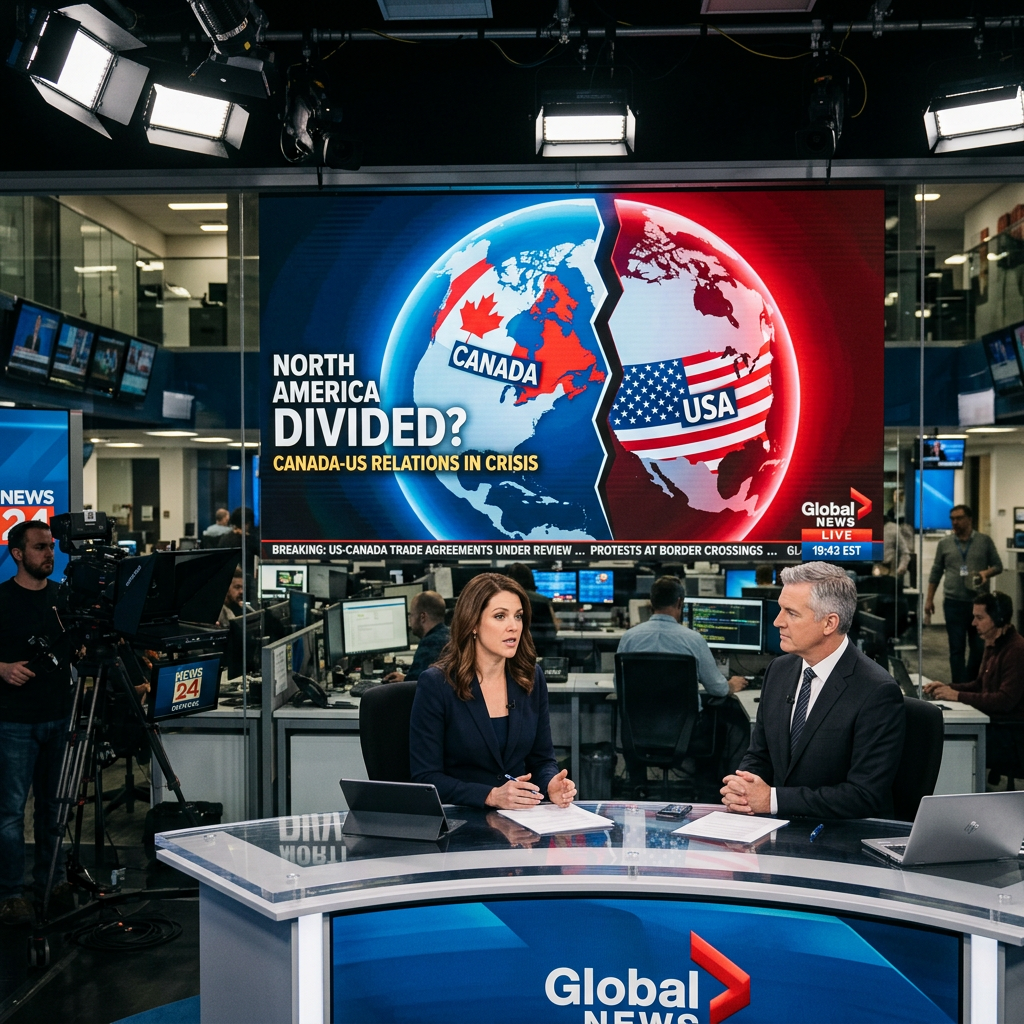
When there are parties within and ouside our borders trying to rip us apart, joining together at this time, from coast to coast to coast has never been more important. When the richest man in the World joins in the conversation, one who supports the Trump it gets very real.
The Toronto Sun on October 9th. reported “Good, Quebec should separate,” Musk said in his reply to the tweet, which as of Friday morning garnered over 18,000 likes and over 2,200 retweets.
In a reply to his own tweet, Musk added, “they would be better off. Alberta and Saskatchewan should separate too.”
Canada needs a strong, united voice to stand up for our national interests in an increasingly difficult relationship with the United States.
We have more in common as Canadians than the forces trying to divide us would have us believe. Our strength lies in our unity, our shared democratic values, and our determination to decide our own future.
Allowing separatist sentiment and radical-right voices in Alberta to gain greater influence risks deepening divisions at a time when Canada needs to stand together. We must also be alert to outside efforts that could exploit those divisions.
A strong Canada depends on informed citizens, an independent press, and a willingness to put the country’s future ahead of division.


Leave a Reply