
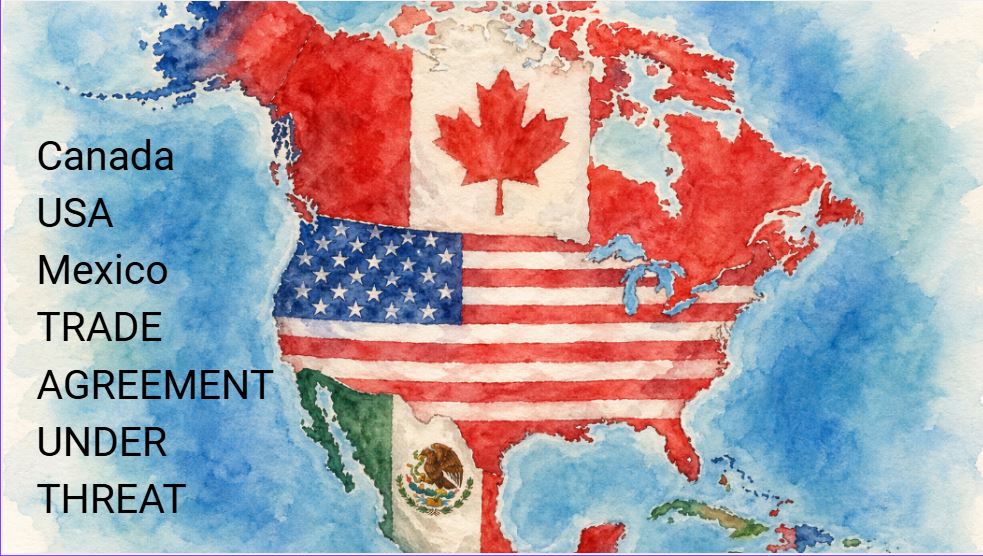
In any kind of economic conflict—trade disputes, tariffs, or inflation shocks—the impacts are not evenly shared.

In Canada, the people with the least cushion take the first and hardest hits. When prices rise or jobs become uncertain, those with savings, assets, or influence can adapt. Those already on the edge cannot.
We are already seeing the pressure points. Housing costs remain high, food prices strain household budgets, and interest rates have tested both families and small businesses.
These are not abstract forces. They are lived realities—and they are amplified in times of economic tension.
Economic pressure does more than strain household budgets—it shapes how people understand what is happening around them.
Those living closest to the margin are often the most exposed to simple, repeated narratives: that something was broken, that someone is to blame, and that only one path exists to fix it.
CHECK YOUR NEWS SOURCE, IS IT TRUE?
In times of uncertainty, repetition can be powerful. It can clarify—but it can also narrow the conversation. When people are under pressure, the loudest explanation often becomes the easiest one to believe. The conservative right in both the United States and here in Canada use this style of narrative. It does not have to be factual just get media attention.
This isn’t inevitable. Policy choices matter.
Governments can soften the blow—or make it worse. Targeted relief, job protection, and strong social supports can reduce the damage. Without them, economic conflict doesn’t just shift pressure between countries—it widens the gap within our own.
Canada does not experience economic conflict as a single, unified force. It is felt differently depending on where you stand.
And too often, those with the least are asked to absorb the most.



Leave a Reply